The £12 Suspect: Clearing an ABS Light Before You Buy a Hub
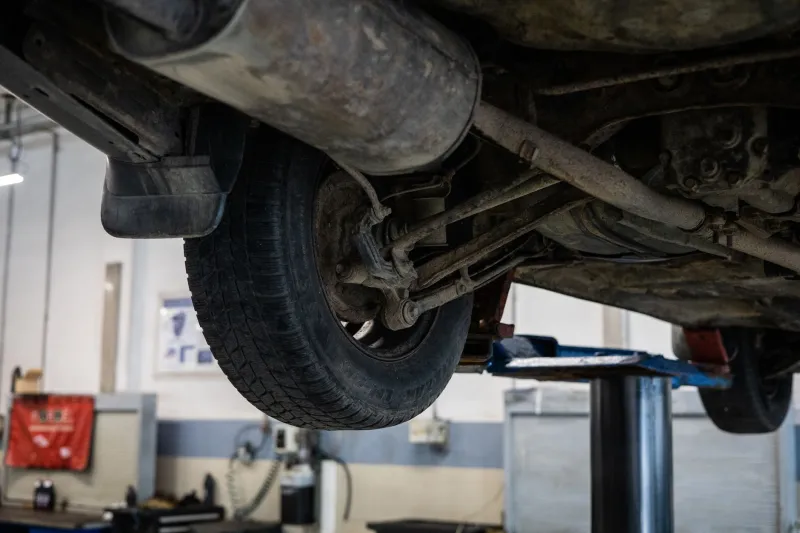
An ABS light comes on, the garage plugs in a scanner, and the verdict lands before you have finished your coffee: new hub. Sometimes that is right. Often it is not. On plenty of UK cars, the real culprit is a thin toothed ring on the hub or CV joint that has been quietly eaten by road salt. The bearing may still be fine. The sensor may still be fine. But the ring has cracked, swollen or lost a tooth, and the ABS computer is reading nonsense.
At CarPartsLink24, we like a diagnosis that costs less than the repair. So before you authorise a four-figure guess, put the reluctor ring on the witness list.
Why the ring fails before the bearing howls
The reluctor ring, also called a tone ring or ABS ring, is the steel or composite disc with teeth that the ABS sensor reads. It usually lives on the outer CV joint at the front or on the hub at the rear. It is exposed to everything the road throws at it, including the gritter. In a UK winter, that means brine, stone chips and repeated wet-dry cycles.
Rust gets under the coating and lifts the metal. The ring can swell, crack at the root of a tooth or start to spin on its carrier. A missing tooth or a rust blister changes the air gap between ring and sensor. The ABS module then sees a wheel speed that drops out or spikes, especially at low speed. That can trigger the ABS light, an ESP or traction warning, or a fault code pointing at a sensor that is actually doing its job.
A worn wheel bearing usually makes noise that rises with speed and changes when you load the corner. A reluctor ring can be silent. Do not let a noisy tyre or a rusty backplate talk you into a hub before you have looked at the teeth.
The driveway inspection that costs nothing
Park on level ground, chock the wheels and switch off the ignition. Read the fault codes first and write down which corner the car is complaining about. Do not clear the codes yet. You want the freeze-frame data and the wheel-speed history if your scanner has it.
Then get your head into the wheel arch. On many cars you can see enough of the ring through the gap between the hub and the backplate, or after removing the wheel. Rotate the wheel slowly by hand and look for three things: cracks radiating from the teeth, rust jacking that has lifted the ring away from its seat, and missing or rounded teeth. Compare it with the opposite side. If one ring looks furry and swollen while the other still has crisp edges, you have a suspect.
Check the sensor face too. A sensor covered in metallic debris or sitting too far from the ring can cause the same fault. Look for a cracked sensor body, chafed wiring or a corroded plug. Give the harness a gentle wiggle while watching live data if you can. Do not pry on the ring with a screwdriver to test it. If it is already cracked, you will finish the job for it.
Tooth count and diameter are the real part numbers
This is where UK buyers get caught. A reg plate identifies the car, not the exact hub or CV joint that was fitted on the line. There can be mid-year changes, different ABS systems and aftermarket shafts with the wrong ring already attached.
Before you buy a replacement ring, count the teeth. Then measure the inner diameter, the outer diameter and the width. Note whether the ring is flat, chamfered or pressed onto a shoulder. Some rings are a light interference fit; some are bonded; some are part of the hub and cannot be swapped on their own. If you are buying a complete hub or used carrier, confirm the tooth count, sensor type and connector shape as well. A ring with the right diameter but one tooth fewer will not make the ABS module happy.
Use the VIN or the original part number where you can. Take a photo of the old ring next to a ruler and keep it on your phone. Motor factors see plenty of returns from buyers who matched the car but not the ring.
Prove it with live data before you spend
A visual check is good. Live data is better. With a scan tool that can show individual wheel speeds, drive slowly in a straight line at walking pace and watch all four readings. They should climb and fall together. A wheel that drops to zero, jumps around or reads differently from its neighbour at low speed is telling you where to look.
If you have an oscilloscope, a good sensor and ring should produce a clean square wave or sine wave, depending on the system. A cracked ring often shows a glitch once per revolution. That is the signature you want before you condemn a bearing.
Also check the obvious: tyre pressures, wheel bearing play and a bent backplate rubbing on the ring. A cheap code reader that only says front left ABS sensor is not proof. The sensor is reporting what the ring is doing.
Standalone ring, hub assembly or used carrier?
If the bearing is smooth and quiet, and the ring is available separately, a standalone ring is usually the cheapest sensible repair. It is not always easy: the hub or shaft may need pressing, and some rings need to be heated to a specified temperature, not guessed at with a blowtorch.
If the bearing is rough, noisy or has play, a complete hub assembly makes more sense than fitting a ring to a tired bearing. If the ring is integrated into the hub, you have no choice. A used carrier can work, but only if you can confirm the tooth count, sensor type, bearing condition and ratio. Buying a used hub to save money and inheriting someone else's worn bearing is not a shortcut.
The buying checklist
- Confirm the faulty corner with live data, not just the code.
- Count the teeth and measure the ring before ordering.
- Match the sensor type and connector if buying a hub or carrier.
- Check whether the ring is separate, pressed or integrated.
- Use VIN or OEM part number where possible.
- Buy from a seller with a clear returns policy.
- Fit the ring without hammering it on crooked.
- Recheck live wheel speeds and clear codes only after the repair.
An ABS light is an MOT fail, so this is not a job to ignore. But it is also not a job to throw parts at. Inspect the teeth, measure properly and let the data convict the right component. Your hub bearing might be innocent.