The Door-Shut Birthday: Why Build Date Beats Registration Date for UK Parts Buyers

A number plate tells you when a car joined the UK traffic stream. It does not tell you when it was built. That gap matters more than most drivers think, because manufacturers do not wait for January to roll around before changing parts. A facelift, a running update or a quiet mid-year revision can land in showrooms while older stock is still being registered, and that is exactly how a same-age car ends up with different brakes, sensors, lamps or interior trim.
The number plate is a registration event, not a build record
UK cars are often pre-registered, held in dealer stock, moved between sites or registered after a delivery delay. A car can be built in one year and first registered in the next. It can also be built early in a model year and registered much later alongside cars that were built after a facelift. The V5C gives you the date of first registration, not the date the shell went down the line. That is useful for tax and MOT history, but it is shaky ground for buying parts.
So when a listing says fits 2026 model or same year as yours, treat it as a starting point. The real question is whether your car was built before or after the change point. Two motors wearing the same 26 plate can sit on opposite sides of that line.
Find the birthday before you find the part number
The build date is usually closer than you think. Start with the door shut. Many cars have a manufacturer sticker on the B-pillar, door aperture or slam panel with a month and year. Some are plain, some use a code, and some are hidden under trim or grime. Clean the sticker and photograph it before you start ringing suppliers.
If the sticker is missing or unreadable, look under the bonnet. Chassis plates, strut-top stickers and underbonnet labels often carry build information or option codes. On some models the build sheet is tucked in the spare wheel well or behind a trim panel. None of this is glamorous, but it is faster than ordering twice.
Then use the VIN as your fitment key. The VIN is not just a random string for insurance quotes. Parts catalogues often use it to narrow the exact variant, engine code, brake setup and trim level. Read it from the windscreen, the door shut or the chassis plate and write it down correctly. Do not rely on a reg lookup alone, especially if the car has had a private plate, a clone scare or a mid-life identity change.
VIN model year is not the same as build month
The tenth character of a VIN often encodes a model year, but model year is not a build date. It is a manufacturer designation, and it can start early or run late depending on the brand and market. It will not tell you whether your car left the line in March or September. Use the VIN to confirm the exact catalogue entry, but use the build plate and the parts catalogue change notes to pin down the revision.
This is where a good motor factor earns their keep. Give them the VIN and the build date, not just the registration. Ask them to check for a split year or a change point. If they cannot tell you where the break falls, try a dealer parts desk with the VIN. You are not being awkward; you are doing the job once.
Facelifts do not follow the calendar
A facelift is rarely just a new bumper and a shinier grille. Mid-cycle updates often bring different headlamp connectors, revised ABS sensors, new brake calipers, altered suspension arms, fresh wiring looms and updated interior fittings. Some changes are visible. Many are not. A car can look pre-facelift from the outside and still have later running gear underneath, or the reverse if a previous owner has been creative with bumpers.
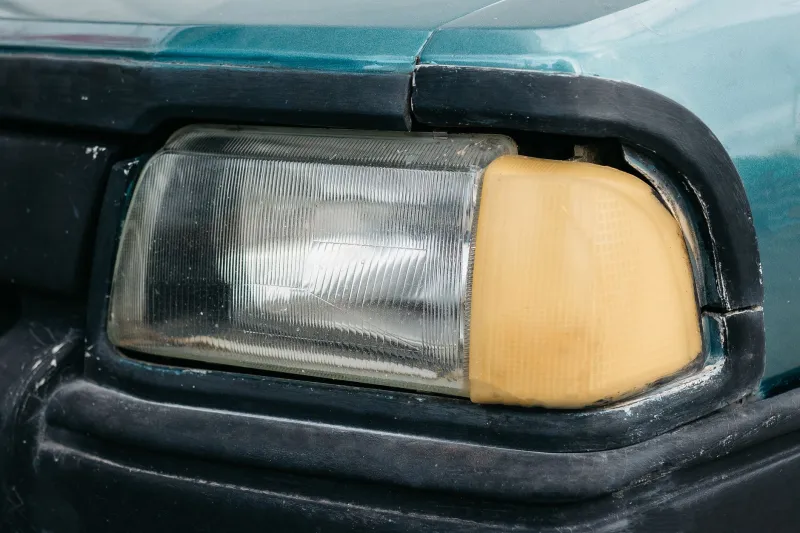
The riskiest areas are the ones that mix old and new hardware. Brake pads and discs can change with a caliper upgrade. Wheel bearings and ABS sensors can change with a hub revision. Headlamp units can change with a wiring plug or levelling system. Even trim clips and door handles can differ after a mid-year update. If you are buying used, the donor car's build date matters as much as yours.
A five-minute pre-order routine
First, photograph the build plate and the VIN. Second, note the exact model, engine code and trim. Third, ask the seller to confirm fitment against the VIN, not just the reg. Fourth, check the return policy before paying, especially on electrical parts and special-order trim. Fifth, keep the packaging until the part is fitted and working. That sounds basic, but it is the difference between a clean refund and a drawer full of orphaned sensors.
For brakes and safety parts, do not guess. A wrong pad shape or disc offset is not a small inconvenience. It can mean a stripped caliper bolt, a ruined wheel bearing or an MOT failure on the brake test. For lamps, a wrong unit can fail aim checks or throw warning messages. For sensors, a wrong connector can send you chasing faults that were never there.
Used parts need the donor's birthday too
Buying used OEM parts is a sensible way to keep a UK car on the road, but a breaker's listing that says fits 2026 model is not enough. Ask for the donor VIN and build date. Compare the part number, the connector shape and the mounting points. If the seller cannot provide a clear photo of the label or the part number, walk away. There are plenty of correct used parts out there; you do not need to gamble on a mystery box.
Before you hit buy, remember that the number plate is just a registration marker. The door-shut sticker, the VIN and the catalogue change notes are what tell you whether the part will actually fit. Check the birthday first, and the facelift trap stops being a trap.