Rear Caliper Triage: Check the Carrier, Slider and Lever Before You Buy the Whole Unit
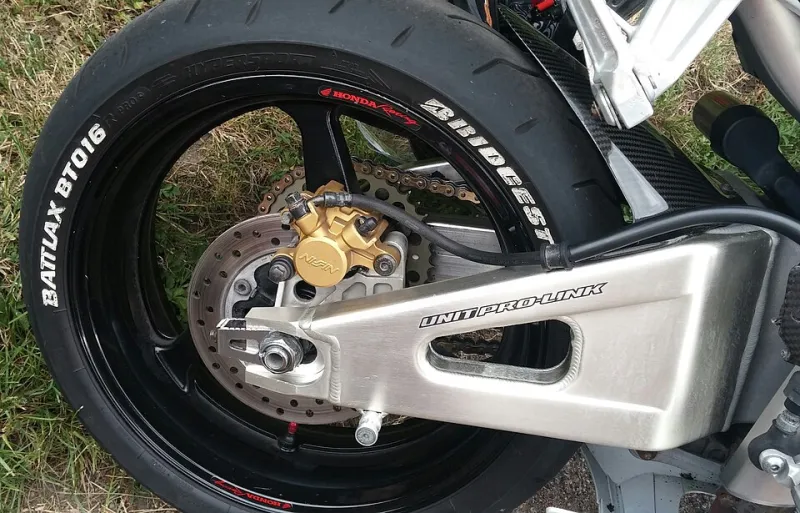
Photo: MAbbey, CC BY-SA 4.0, via Wikimedia Commons
Rear brake calipers have a reputation problem. When a UK car drags a back wheel, overheats a disc or fails an MOT on parking brake efficiency, the caliper tends to get blamed before anyone has properly separated the fault. Plenty of those calipers are fine. The piston may be healthy while the carrier bracket, slider pins, pad abutments or handbrake lever are doing the damage. Ordering a complete caliper before that triage is how a sensible repair turns into an unnecessary parts bill.
As of November 2026, the smart buying approach is the same one good workshop foremen use: diagnose the actual mechanism first, then buy only the parts that failed. A rear caliper is an assembly, not a single moving part. Treat it that way and you avoid both wasted money and a second strip-down.
Start With the Symptom, Not the Part
A rear caliper fault rarely announces itself with one clear symptom. You might get a wheel that runs hot after a short drive, a handbrake that needs extra clicks, uneven pad wear on one side, a binding noise that fades after braking or a parking brake that passes one day and scrapes the next. On a UK car that spends time on salted winter roads, corrosion around the carrier and pad abutments can mimic a seized piston surprisingly well.
Before buying anything, get the wheel off and look at how the pads are wearing. If the inner pad is down to metal while the outer pad has life left, suspect a sticking slider or a caliper that is not floating properly. If both pads are worn evenly but the handbrake lever does not return, look at the lever and cable before condemning the piston. If the piston boot is split, fluid is weeping or the piston will not retract with a proper wind-back tool, then the caliper body itself is in the frame.
The Three Rear-Caliper Suspects
Slider pins and carrier bracket
On many rear calipers, the caliper body slides on pins mounted to a carrier bracket. The pins live in a hostile place: road spray, grit and heat. When the grease dries out or the rubber boots split, the caliper stops sliding cleanly. The piston can be perfect and the brake will still drag. The carrier bracket itself can also wear at the pad abutment faces, leaving a step that stops the pad releasing. Check for torn pin boots, pitted pins, a dry or gritty slider and grooves where the pad ears sit.
Handbrake lever and internal adjuster
On manual rear calipers with an integrated handbrake mechanism, the lever on the back of the caliper should move freely and return positively. If it is stiff, corroded or slow to return, the parking brake can drag even when the cable is adjusted correctly. Some calipers have an internal adjuster that can stick or fail. Do not confuse a cable issue with a caliper issue: disconnect or slacken the cable at the caliper end where the design allows, then check the lever action directly.
Piston and bore
This is the expensive one, but it still deserves a proper test. Look for a split or ballooning piston boot, brake fluid weeping, heavy corrosion around the seal area and a piston that will not retract or wind back. On vehicles with an electronic parking brake, the rear caliper may need a diagnostic routine to retract the motor before service. Do not force an EPB piston back with a manual tool unless the manufacturer procedure says it is safe.
Bare, Loaded or Remanufactured?
The labels on parts listings are not always used consistently, so read the description and check the photo carefully. A bare caliper is usually the caliper body and little else. It may not include the carrier bracket, pads, slider pins or handbrake lever. A loaded caliper normally comes with pads and often the bracket and fitting hardware, but you need to confirm exactly what is in the box. A remanufactured caliper is a rebuilt original unit, which can be a good route if the casting is sound and the rebuild quality is trustworthy.
For a UK daily driver, a loaded or remanufactured unit can make sense when the existing caliper is badly corroded and the carrier is past saving. A bare caliper is often the better buy when the carrier and bracket are healthy and only the body has failed. The key is not to pay loaded-caliper money for a bare unit, or buy bare and then discover you needed the bracket as well.
Match the Caliper to the Car, Not the Photo
Rear calipers are handed. Left and right are not interchangeable on most cars, and a photo of a similar-looking caliper is not proof of fitment. Match by the vehicle's VIN where possible, then cross-check with the engine code, brake code or PR number if the listing asks for it. This matters most on models built in multiple brake configurations, or where an electronic parking brake was added partway through a production run.
EPB calipers need particular care. The motor, connector, piston mechanism and caliper body can differ from the manual handbrake version. Some listings show a caliper that looks right but has the wrong connector or lacks the motor. Check whether the listing is for the caliper with or without the actuator, and whether coding or calibration is required after fitting. If you are buying used, insist on the part number being visible and matched to your VIN.
The Same-Basket Parts That Save a Second Strip-Down
A rear caliper job is a bad time to discover you need a £6 slider kit. Put the small parts in the same order: slider pin kit with boots, pad abutment clips or shims, new bleed nipples where the old ones are corroded, banjo washers if the hose is being disconnected, and caliper-to-carrier or carrier-to-knuckle bolts if the manufacturer lists them as single-use. Check the torque procedure before reusing fasteners. Some stretch bolts should not be recycled.
Also budget for brake fluid and the correct lubricant. Use a dedicated silicone or brake-safe grease on slider pins, not copper grease as a universal cure. Copper grease has its place on some metal-to-metal contacts, but it is not the right choice for every rubber-friendly slider boot. Follow the caliper maker's guidance.
A Buying Checklist for 2026
Before you hit buy, confirm the failing component, the caliper handing, the EPB or manual handbrake type, the VIN or engine-code match and what is actually included in the box. Compare bare, loaded and remanufactured options on that basis rather than headline price. Add the slider kit, clips, bleed nipples and fasteners to the basket if they are even slightly tired. It is cheaper than a second afternoon under the car, and it keeps the rear brakes doing what they should: sliding cleanly, releasing fully and sparing the disc from a slow, gritty death.