The Plug Is the Part: Avoiding Used-Sensor Misfits in the UK

Photo: Matt W, PDM-owner, via Wikimedia Commons
Buying a used sensor online or from a breaker's yard feels like a shortcut. The listing says it fits, the photo looks right and the price is half new. Then it arrives, you crawl under the car, and the plug will not click. Or worse, it clicks, the dash light stays on, and you have spent a Saturday chasing a fault that was never in the car.
For UK motorists, the connector is the part you should buy first. The sensor body is just the bit that does the measuring. The plug, pinout and loom side decide whether that measurement ever reaches the ECU. That is the connector-first rule: match the socket before you get excited about the spec sheet.
Start with the socket, not the sensor
Two sensors can share the same body, thread and mounting hole and still use completely different plugs. Look at the connector keying: the ribs, slots, latch position and pin spacing. A plug with the right number of pins can still refuse to seat because one keyway is in the wrong place. If it will not click home without force, stop. Forcing a connector is how you turn a cheap used sensor into a damaged loom.
Colour is not proof either. A black plug on one model year can be grey on another, and the wire colours behind it can change with trim, engine code or a mid-cycle update. Treat colour as a clue, not a guarantee. The reliable check is the shape of the plug face, the pin count and the part number on the sensor itself.
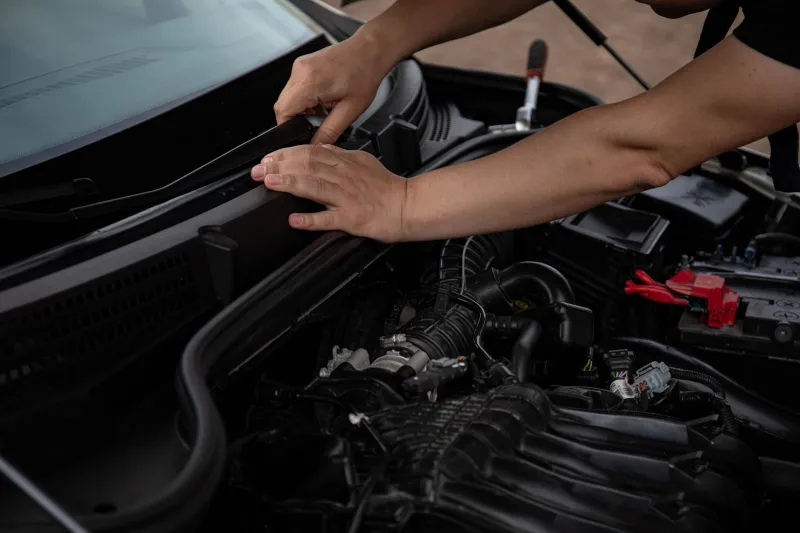
On the car, unplug the old sensor and photograph the loom side and the sensor side with your phone. Get close enough to see the pin arrangement. At a breaker's yard, take that photo with you. Online, ask the seller for a clear picture of the plug face before you hit buy. If the listing only shows the body from three feet away, it has not shown you the part that matters.
Pin count is only the beginning
Three pins does not mean interchangeable. Pin diameter, spacing, sealing and whether the pins are flat or round all matter. Some sensors use the same housing but a different internal circuit, so the ECU sees a signal it cannot use. A common trap is buying by body shape alone: the sensor screws in beautifully, the plug clicks, and the car runs worse than before.
Wire colours are another trap. A red and white wire on one loom is not a promise that the used sensor you are holding matches your car. UK models can differ by engine code, emissions setup and even assembly plant. If you are relying on wire colours, use a wiring diagram for your exact vehicle, not a forum post for something similar.
Part numbers help, but they are not the whole story. Manufacturers supersede numbers, and a used sensor may have been fitted to several models. Use the number as a cross-check, not a substitute for checking the plug. A reg lookup can narrow the search, but it will not tell you whether the plug on the bench matches the socket on your loom.
Pigtails: repair or red flag?
A pigtail is a connector with a short length of wire attached. It is useful when the original plug is brittle, corroded or has been damaged by a clumsy previous repair. But a used sensor with a chopped pigtail deserves suspicion. Someone may have cut it from a different loom, or the plug may have been damaged and the wiring spliced to hide it.
If you are buying a pigtail, match the keying and pin count first, then check the wire gauge and shielding. Sensor signals are low-voltage, and a poor splice can add resistance or pick up interference. A twisted-and-taped joint is not a repair. Solder it properly, use adhesive-lined heat shrink, and keep the shield continuous where the original loom had one. In the UK, damp and salt will find any weak spot in a loom repair, so do the job once.
A pigtail can be a sensible fix, but price it as a repair project, not a direct-fit part. If you wanted a plug-and-play sensor, a chopped connector is not it.
Same body, different signal
Some of the worst used-sensor misfits come from families of parts that look almost identical. ABS wheel speed sensors can be two-wire or three-wire, and they can work with different reluctor types. Lambda sensors can share a thread but differ in heating, signal type and wire count. MAF sensors can be analogue or digital. Crankshaft sensors can be inductive or Hall effect. Fit the wrong signal type and the ECU may see nothing, or see nonsense.
This is why the connector-first rule matters so much. The plug is often the quickest visible clue that two sensors are not the same. If the pin count, keying or latch differs, walk away. If they match, you still need the part number and, where possible, a live-data check before you trust it.
Bench checks before you fit
Before fitting a used sensor, inspect the pins. Green verdigris, bent terminals, melted plastic or a cracked housing are reasons to return it. Check the sensor face for swarf or damage. Give it a gentle shake; if something rattles inside, put it back in the box.
A multimeter can help, but only if you know what the sensor should read. An inductive crankshaft sensor may show a resistance figure in the hundreds of ohms. A Hall-effect sensor will not give you a simple resistance answer. A temperature sensor's resistance changes with temperature, so compare it to ambient conditions rather than a single number from a forum. Do not apply voltage to a sensor unless you know the circuit. Guessing with a multimeter is a quick way to kill a part that might have been fine.
Live data closes the deal
Where you can, plug the sensor in before you commit to fitting it properly. Read live data. A coolant temperature sensor should show a sensible cold reading that rises with the engine. A MAP sensor should read atmospheric pressure with the key on and the engine off. A lambda sensor should start switching once the engine is warm. ABS wheel speeds should match when the car is rolling. MAF readings should be plausible at idle.
If the readings are frozen, implausible or jump around, return the sensor. Do not clear the fault codes and hope. Check freeze-frame data if your scanner supports it. A used sensor that reads correctly on live data is a much better bet than one that merely looks clean.
A UK buying script
Ask the seller for the registration or VIN, the engine code, a close-up of the plug face and the part number on the sensor. Ask whether the pins are straight and whether the plug latch is intact. Check the return policy before you pay. On eBay, read the listing properly and avoid anything described as fits all. At a breaker's yard, compare the used part with the one you removed, plug face to plug face.
For MOT-related sensors such as ABS, lambda and DPF pressure sensors, a used part can be false economy. Buy new or a reputable aftermarket brand when the fault affects emissions or safety systems. For older cars and low-value repairs, a carefully checked used sensor can still make sense.
The plug is the part. If it does not match, the sensor does not fit, no matter how good the price looks.