Wet Carpets Aren't a Mystery: Fix the Scuttle Leak Before You Buy Linkage Parts
There is a particular smell that arrives in a UK car around late autumn: damp carpet, old screenwash and the faint whiff of a pollen filter that has been quietly composting behind the glovebox. The windows mist up, the passenger footwell feels suspiciously soft, and the first instinct is often to blame the wiper linkage because it lives in the same corner of the car. That instinct can get expensive. Water usually starts higher up, in the scuttle area, and the linkage is often an innocent bystander — or a victim of the same leak. The trick is to diagnose before you hit buy.
First, prove where the water is coming from
Before ordering anything, dry the cabin as best you can and put the car somewhere under cover. Then use a hosepipe on a low, gentle setting — not a jet wash — and run water over the windscreen and scuttle while someone watches inside with a torch. Check both footwells, the under-dash area, the pollen filter housing and the boot floor if the car has a rear wash/wipe. A leak that appears only after rain, and tracks down the bulkhead or behind the glovebox, points strongly at the scuttle. A sweet, syrupy smell and a dropping coolant level point at the heater matrix instead. Clear water after aircon use can simply be condensate. Get the source right before you blame a part.
Also check the pollen filter itself. If it is soggy, black and crumpled, water has been sitting in the housing. That does not automatically mean the linkage is scrap, but it does mean the housing seal, drain route or scuttle panel fitment needs a proper look.
The scuttle area: small parts, big puddles
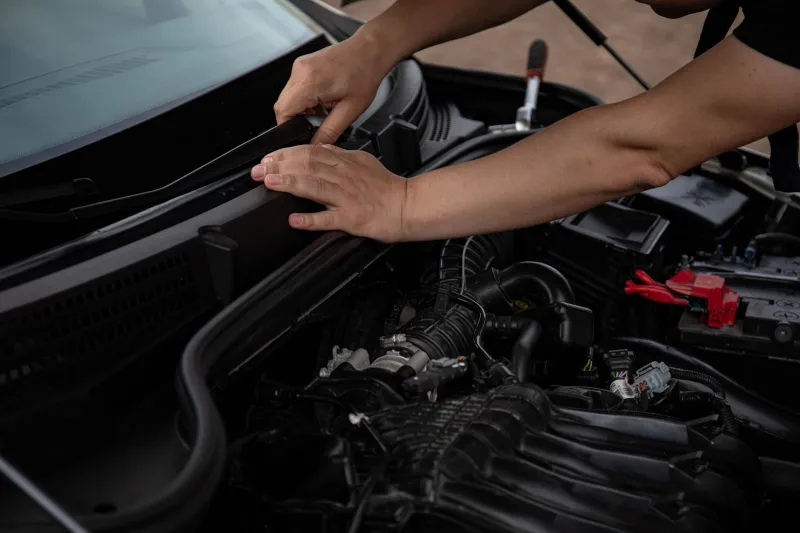
The scuttle — sometimes called the plenum chamber or cowl area — is the tray below the windscreen that collects leaves, grit and rain. It is designed to send water away through drains, usually via rubber grommets or one-way flaps. When those drains block with leaf litter, the tray fills up and water finds the nearest weakness. On right-hand-drive UK cars, the cabin filter housing and wiper linkage sit in a mirrored arrangement compared with left-hand-drive models, so a part that looks correct in a photo can be completely wrong for your car.
Common weak points include the seal around the cabin filter housing, perished wiper spindle seals, cracked grommets, loose scuttle clips and — less often — windscreen bonding or bulkhead seams. A worn wiper linkage does not usually create the leak by itself, but a wet wiper motor and corroded spindle area can accelerate wear. If the wipers clunk, judder, park in the wrong place or move slowly in cold weather, the linkage may be tired. If the carpet is wet, fix the water path first.
Linkage wear versus water damage
A worn linkage typically shows up as play in the ball joints, a clonk when the wipers change direction, or arms that sit unevenly. Water damage shows up as corrosion around the motor connector, a soggy sound deadening pad under the scuttle, or a motor that blows fuses after heavy rain. Do not order a full linkage assembly just because the footwell is wet. Inspect the spindle seals and motor first. If the linkage is fine, a seal and a drain clean may be all you need. If the linkage is genuinely worn, buy the correct assembly — not a universal kit — and replace the spindle seals while you are in there.
Buy by OEM number, not by photo
This is where most wrong-part orders happen. Wiper linkages, cabin filter housings and scuttle clips are not one-size-fits-all. Use your registration or VIN to check a proper parts catalogue, and confirm the listing is for a right-hand-drive car. Look for the OEM part number on the old component — often stamped or printed on the linkage arm, motor housing or filter housing — and match it exactly. Check for superseded numbers too: manufacturers revise parts, and a later number may replace the original. A photo showing a similar-looking linkage proves very little.
If you are buying used, ask for the donor car's VIN and the part number in the listing. Avoid any linkage with obvious spindle play or a corroded motor connector. For seals and clips, new is usually cheap enough that used makes little sense. Buy the pollen filter at the same time, and check whether the housing seal is sold separately or only with the housing. Some cars use a one-shot clip or a foam gasket that crumbles on removal, so add those to the basket before the job starts.
The sensible order list
Start with the simple stuff: scuttle panel clips, drain grommets and a cabin filter. Then add the cabin-filter housing seal and wiper spindle seals if your car uses them. Only add the linkage assembly or wiper motor if inspection shows wear, corrosion or a failed motor. Include new wiper arm nuts if the old ones are rusty, and check the workshop procedure for any specified sealant or butyl strip. A cheap drain grommet is far better value than a second-hand linkage you did not need.
Fitting checks that save a second order
Clean the drains properly rather than poking them through with a screwdriver. Refit the scuttle panel so the clips seat fully, and do not overtighten plastic fixings. Align the wiper arms to the marked screen position before tightening, and torque the nuts to spec. After reassembly, run the low-pressure hose test again and watch for drips. Leave the carpets and underlay to dry properly — a wet pad will keep misting the windows and corroding connectors long after the leak is fixed. If the car has an MOT due, a damp footwell can also mask bigger electrical faults, so sort it now rather than later.
The scuttle shuffle is not glamorous, but it is cheap compared with a fried wiper motor and a mouldy interior. Prove the leak, match the RHD parts by OEM number, and only buy the linkage when it has actually earned replacing.