Rubber Has a Birthday: The Pre-Fit Date Check UK Buyers Keep Skipping
There is a particular kind of eBay bargain that feels almost too good to pass up: a pair of branded tyres with full tread, a boxed set of OEM bushes, or a coolant hose still in its wrapper. The photos look clean. The part number matches. The price is right. Then you get it home and notice the rubber has the same texture as a dried-out door seal.
Rubber is a consumable even when it has never touched a car. It starts ageing from the day it is made, and storage conditions can speed that up or slow it down. Fitment is only half the job. Before you hand over cash in 2026, check the birthday — and the condition — not just the part number.
Why an unused part can still be past its best
Rubber compounds are designed to survive heat, oxygen, ozone, sunlight, oils and constant flexing. Park them in a warm garage for years and they still change. The plasticisers that keep a bush supple can migrate out. A hose can harden on the shelf. A tyre can develop sidewall cracking before it has covered a single mile.
That is why 'new old stock' is not the same as 'new'. A part can be technically unused and still be a poor buy. For tyres, UK law and the MOT focus on tread depth and condition rather than a fixed age limit for cars, but that does not make a ten-year-old tyre a smart fitment. For bushes and hoses, there is often no MOT-specific date rule at all — you are relying on your own inspection and the seller's honesty.
Tyres: find the DOT block and read the last four digits
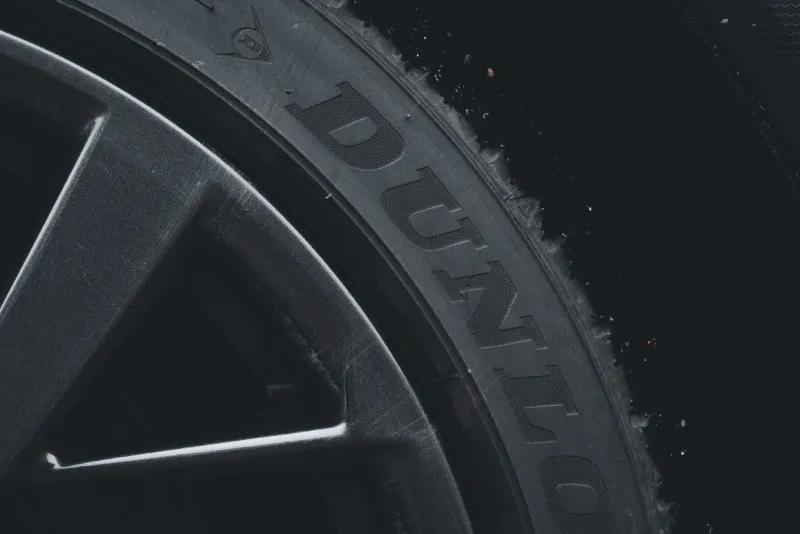
The first check on any tyre is the DOT code moulded into the sidewall. Look for the letters DOT, then a block of characters. The final four digits are the week and year of manufacture. A code ending 2321 means week 23 of 2021. A code ending 0826 means week 8 of 2026.
Three-digit codes are pre-2000 and should be treated as museum pieces, not road tyres. Some tyres have the full date on only one sidewall, so if you are buying used or mail-order, ask for photos of both sides. Do not accept a photo of the tread and a promise that it is 'recent'.
Age guidance varies by manufacturer and tyre type, but most car tyres are expected to be inspected closely from around six years and replaced by around ten years regardless of tread, with some makers specifying earlier. Check the vehicle handbook and the tyre maker's own advice. A part-worn tyre can also be legally sold in the UK only if it meets the part-worn rules, but the date code still tells you what you are really buying.
A tyre with a 2026 date code and a cracked sidewall is still a bad tyre. A tyre with a 2019 code and perfect storage might be usable, but it should be priced accordingly — and inspected with suspicion. Look for sidewall crazing, bulges, cuts, embedded objects and evidence of repeated repairs. If the inner sidewall is hidden, get it checked before fitting.
Bushes: look for the moulded clock, then look for shine
Rubber bushes often carry a moulded date clock — a small circle with arrows or dots marking the year and month. Not every aftermarket bush has one, and some manufacturers use batch codes instead. If there is no readable date, ask when it was made and how it was stored. A seller who cannot answer is telling you something.
Condition matters as much as age. Fresh rubber has a slight sheen and flexes without complaint. Old stock can feel hard, waxy or brittle. Check the bonding between rubber and metal sleeve; separation here is a failure waiting to happen. Look for cracks at the flex points, especially on voided bushes that are designed to move.
Fitment traps matter too. Two bushes can share a part number and still differ in hardness, void orientation or sleeve length. Do not buy an 'uprated' bush just because it is cheap and available; harder rubber can sharpen ride quality and may affect insurance if it counts as a modification. If you are replacing a worn bush, compare the old and new side by side before pressing anything in.
Hoses: squeeze cold, read the markings, reject the crunchy ones
Coolant hoses often carry printed manufacturer markings, batch numbers and sometimes a date. Brake hoses have their own approval markings and crimp details, but a date is not always obvious. Fuel hoses may have SAE or R-markings and a shelf life that depends on storage.
The driveway check is simple: with the hose cold and off the car, squeeze it along its length. It should feel pliable and spring back. A hose that feels hard, crunchy or has a chalky surface is suspect. Look for cracks near the clamps, bulges, soft spots and fraying. A hose that has been stored coiled tightly for years may hold a set; that is not always fatal, but it is a warning.
For brake hoses, do not take chances. A perished brake hose is a safety item, not a styling choice. If the date or condition is unclear, buy a new branded hose from a reputable supplier. The same goes for any hose that carries pressurised coolant or fuel.
A pre-purchase checklist for UK buyers
Before you pay, run this list:
- Ask for a clear photo of the tyre DOT code, bush date clock or hose markings. No photo, no deal.
- Check the part number and any supersession against your registration or VIN, not just the listing title.
- Ask how the part has been stored: dark, dry and cool is good; a hot shed or a sunny shelf is not.
- Inspect flex points, sidewalls and clamp areas for cracks, bulges or hardening.
- Confirm the seller's returns policy. Old rubber is exactly the sort of thing that should be returnable if it arrives perished.
- Price it like old stock. A 2018 tyre is not a 2026 tyre, even if the tread is deep.
The bargain is only a bargain if it fits, works and lasts. Rubber has a birthday — check it before you bolt it on.