Scab or Scrap: The Underbody Audit UK Drivers Need Before Ordering Suspension Iron
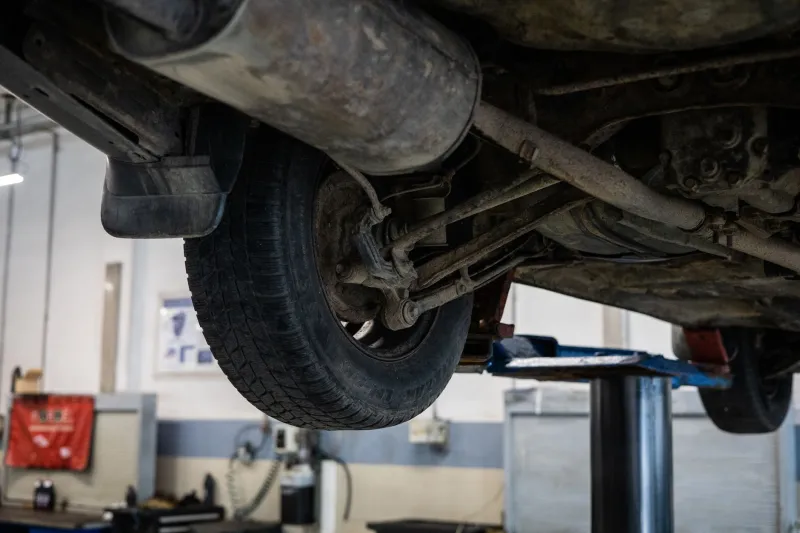
A bargain wishbone is only a bargain if the shell it bolts to is sound. Every winter, UK drivers order fresh suspension arms, brake pipes and exhaust hangers, then discover the real problem is the bracket, captive nut or floorpan those parts attach to. Gritter season makes that mistake more expensive, because salt and brine get into seams and stay there. Before you hit buy, spend twenty minutes under the car. It is the cheapest diagnostic you will do all month.
Start With the Advisory, Not the Part Number
MOT history is free and it is a goldmine. Look beyond the pass or fail stamp and read the advisories. Testers use careful language for a reason. Phrases like corrosion within prescribed areas, suspension mounting slightly corroded, or underbody generally corroded are not small talk. They are notes that moisture has found a home.
One advisory is not a death sentence. A ten-year-old UK car with a dry, lightly rusted floorpan can still be a good donor for new arms. But repeated advisories across several years, especially around subframe mounts, sill jacking points or suspension turrets, tell you the shell is going one way. If the current MOT lists corrosion near a mount you are about to load with new hardware, stop and inspect before spending.
The Gritter Season Problem
Road salt does not need a hole to start work. It creeps behind seam sealer, sits in the lip of a bracket and attacks the inside of a box section. By the time you see orange staining on the outside, the metal behind it may already be thin. That is why November and December are bad months to fit new suspension iron without a proper look. You are bolting fresh parts to metal that has had a whole winter of brine working on it.
Get Under There Safely
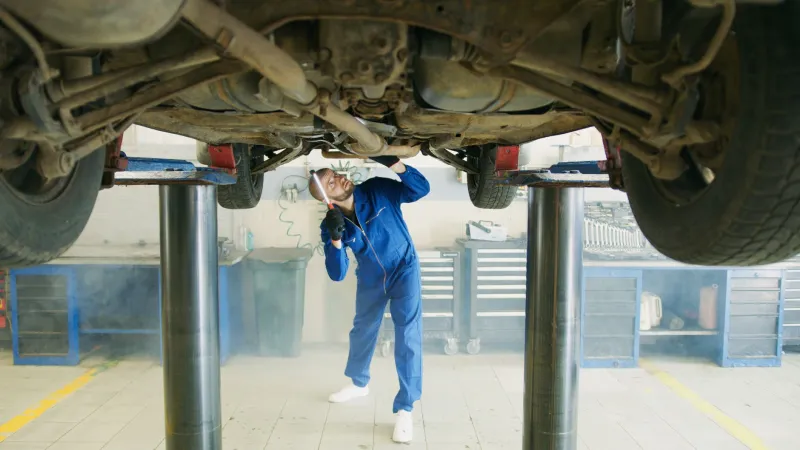
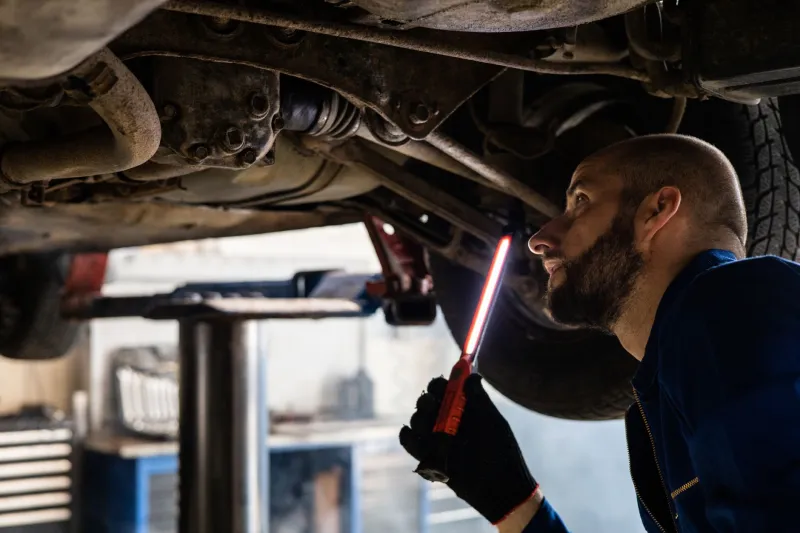
Use ramps on level ground or a proper lift. Chock the wheels, apply the handbrake and never rely on a trolley jack alone. Let the car cool, wear gloves and eye protection, and take a bright torch. A phone camera is useful because it sees into places your head will not fit.
Do not attack everything with a wire brush straight away. Photograph first. A gentle poke with a plastic scraper or a small screwdriver is enough to test whether metal is sound — but keep away from brake pipes, fuel lines and wiring. If a pipe feels crunchy under its coating, treat it as suspect and get it checked properly. You are looking for information, not creating a new leak.
Four Zones That Decide the Job
First, the subframe mounting points. Look at the bolts, captive nuts and the metal around them. If a bolt spins or the nut turns inside the shell, the repair is no longer a bolt-on. Second, the wishbone and arm brackets. Cracks radiating from bolt holes, or brackets that flex when levered gently, mean welding before fitting.
Third, the floorpan, sills and jacking points. These are structural areas and MOT favourites. Surface rust can be cleaned; soft metal, perforation and splitting seams cannot be ignored. Fourth, the rear axle beam, exhaust hanger brackets and brake pipe clips. A new exhaust hanger will not fix a rotten mounting bracket, and a corroded brake pipe clip can crush the pipe it holds.
Read the Seam Sealer Like a Mechanic
Factory seam sealer should look continuous, slightly flexible and firmly stuck. Cracks, lifting edges, bubbles and rust bleeding from underneath are warning signs. Moisture gets behind lifted sealer and stays there. Aftermarket underseal is worse because it can hide a scab until it becomes a hole. If the coating is soft, flaking or freshly painted over rust, scrape a small area and look at what is underneath.
Cosmetic Rust vs Structural No-Buy
Surface rust is usually dry, orange-brown and sits on top of sound metal. Tap it gently: sound steel rings, while thin or delaminated metal sounds dull. Pitting, flaking layers, perforation, cracks around bolt holes and metal that moves under finger pressure are structural warnings. So is a mount that has been welded badly in the past, with slag and pigeon-poo beads around a load-bearing area.
If the corrosion is in a prescribed area, or near a suspension mounting, do not guess. Get a welder or MOT tester to look before you order parts. A welding quote may be cheaper than a new subframe you cannot safely fit. On a cheap car, it may also tell you to walk away.
The Bolt-Up Test Comes Last
Once the metal looks sound, check the hardware. Clean the threads, test the old bolt and make sure the captive nut is still captive. If the mount needs a repair insert or a welded nut, price that in. Compare the new part to the shell before fitting. New bushes will not save a cracked bracket, and a fresh arm will not align if the mounting point has moved.
A 2026 Buying Checklist
Check the MOT history and advisories. Photograph the mounts before ordering. Inspect seam sealer around every bracket. Confirm bolts and captive nuts are sound. Budget for welding first, parts second. Buy one-shot bolts and correct-grade hardware where specified. Protect cleaned areas properly after repair, but never seal over wet metal or active rust.
The metal underneath decides whether your suspension part is an upgrade or a waste of money. Check it before the gritter gets another go at it.