Thickness, Flares and Routes: Buying Brake Pipes That Outlast the Gritter
Brake pipes are the cheapest part of a brake job until they are not. A tenner of 3/16 copper-nickel can turn into a four-figure bill when a corroded line lets go over a rear subframe, or when a pre-bent section arrives with the wrong flare and the car is on stands until Tuesday. In a UK winter, the gritter is the enemy: salt spray sits in the clips, behind the fuel tank, and along the ABS pump routes, and it does its work quietly. This is a buying guide, not a welding lecture. The aim is to help you choose the right replacement pipe before you start, so the car goes back together once.
Start with a caliper, not a catalogue
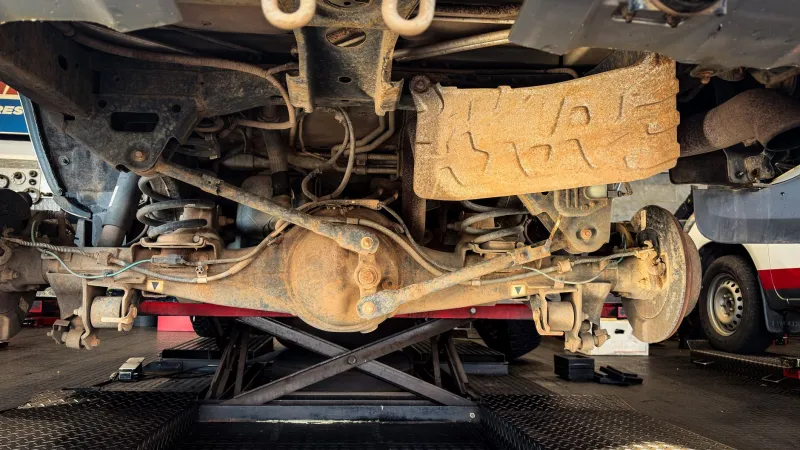
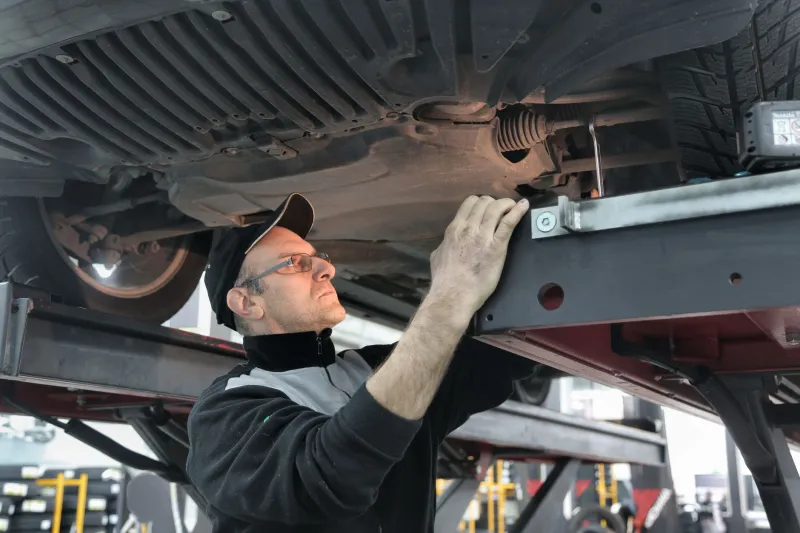
Before you order anything, get the car up and inspect the full run. Wire-brush the worst spots—usually where the pipe passes through a clip or disappears over a seam—and measure the outside diameter with a caliper at three points: a clean section, a pitted section, and a bend. A standard 3/16in brake pipe should read around 4.75mm. If the worst reading is noticeably lower, or if the surface is pitted enough that a pick catches, you are replacing, not painting. Take photos with a ruler in frame; they will save you when the pre-bent section arrives and you cannot remember which way the union faces.
The 2mm rule: clearance is part of the purchase
Here is the rule we use on the driveway: after fitment, every new pipe should have at least 2mm of clear air between it and any fixed or moving component. That sounds fussy until you see a shiny new copper-nickel line rubbing on a suspension arm because the pre-bent shape was close but not close enough. Salt season makes it worse: a 2mm gap that is choked with mud and salt becomes a corrosion trap. When you are buying a pre-bent section, check the routing against the original, not just the length. If the section is not clipped correctly, it will move, rub, and fail. Buy new clips while you are at it—reusing brittle plastic clips is a false economy.
Copper-nickel or coated steel?
For a UK daily, copper-nickel (often sold as Kunifer or cunifer) is the default choice for replacement sections. It bends easily, flares well, and resists salt far better than plain steel. The trade-off is that it is softer, so it needs proper clipping and should not be used where it can vibrate against a hard edge. Coated steel—zinc or polymer-coated—is what many manufacturers fit from new. It is strong and cheap, but the coating is only as good as its weakest point. A stone chip or a scuff from a clip becomes a corrosion starter. If you are replacing a full run on a car you plan to keep, copper-nickel is usually the sensible buy. If you are matching an original coated-steel section on a newer car, check the coating spec and do not mix materials in a way that encourages galvanic corrosion at the unions.
Flares and unions: match the seat, not the thread
This is where most online orders go wrong. A 3/16 pipe can have a DIN bubble flare, an SAE double flare, or a metric ISO flare, and the union nuts can be male or female, long or short. The thread might look right and the pipe still leak because the seat is wrong. Before you buy, look at the original union: is the flare a bubble (rounded) or a double flare (funnel-shaped)? Does the nut have a long shoulder or a short one? On European cars, DIN bubble flares are common; on Japanese and American designs, SAE double flares turn up more often. If you are making up your own pipes, buy a flare kit that matches the vehicle, not the one that was on offer. If you are ordering pre-bent, give the supplier the reg or VIN and ask them to confirm the flare type—not just the length.
ABS routing: the bit pre-bent sections get wrong
ABS and stability-control cars have pipes that run from the pump or modulator to each wheel, often with tight bends around the bulkhead and subframe. A pre-bent set listed for the model may be right for a left-hand-drive car and wrong for a UK right-hand-drive one. The lengths can be similar while the bends are mirrored. Before ordering, trace the original route and note every clip, bracket and heat shield. Check the pipe does not foul the steering column, the master cylinder reservoir, or the ABS pump connectors. If the section is close to the exhaust or a turbo, make sure the replacement has the same heat shielding. A pipe that fits but runs 3mm from a hot component is not a fit.
Ordering pre-bent: the measurements that matter
You do not need to measure every millimetre, but you do need to measure the things that identify the section: the distance between union centres, the length along the run, the diameter of the pipe, the thread of the unions, and the flare type. Photograph the routing with the old pipe in place. Note whether the car has ABS, traction control, or a brake proportioning valve. If you are buying a full set, check whether it includes the clips and the unions. Cheap sets often reuse the original nuts, which may be corroded. Buy new unions in the correct thread and material—brass or steel as specified—and use a proper brake pipe spanner, not mole grips.
A pre-order checklist for salt season
- Caliper reading at the worst pitted point, plus a clean reference reading.
- Flare type confirmed: DIN bubble, SAE double, or ISO.
- Union thread and length checked against the original.
- Routing photographed, including clips, brackets and ABS pump connections.
- Clearance checked: at least 2mm from anything that moves or traps salt.
- New clips, unions and heat shielding ordered with the pipe.
- Pre-bent section confirmed for right-hand drive.
None of this is glamorous. But brake pipes are a classic false economy: the part is cheap, the labour is not, and a leak at the wrong moment is not worth the risk. Measure before you order, match the flare, and give the new line room to breathe. The gritter will be back next year; your brake pipes should not be.